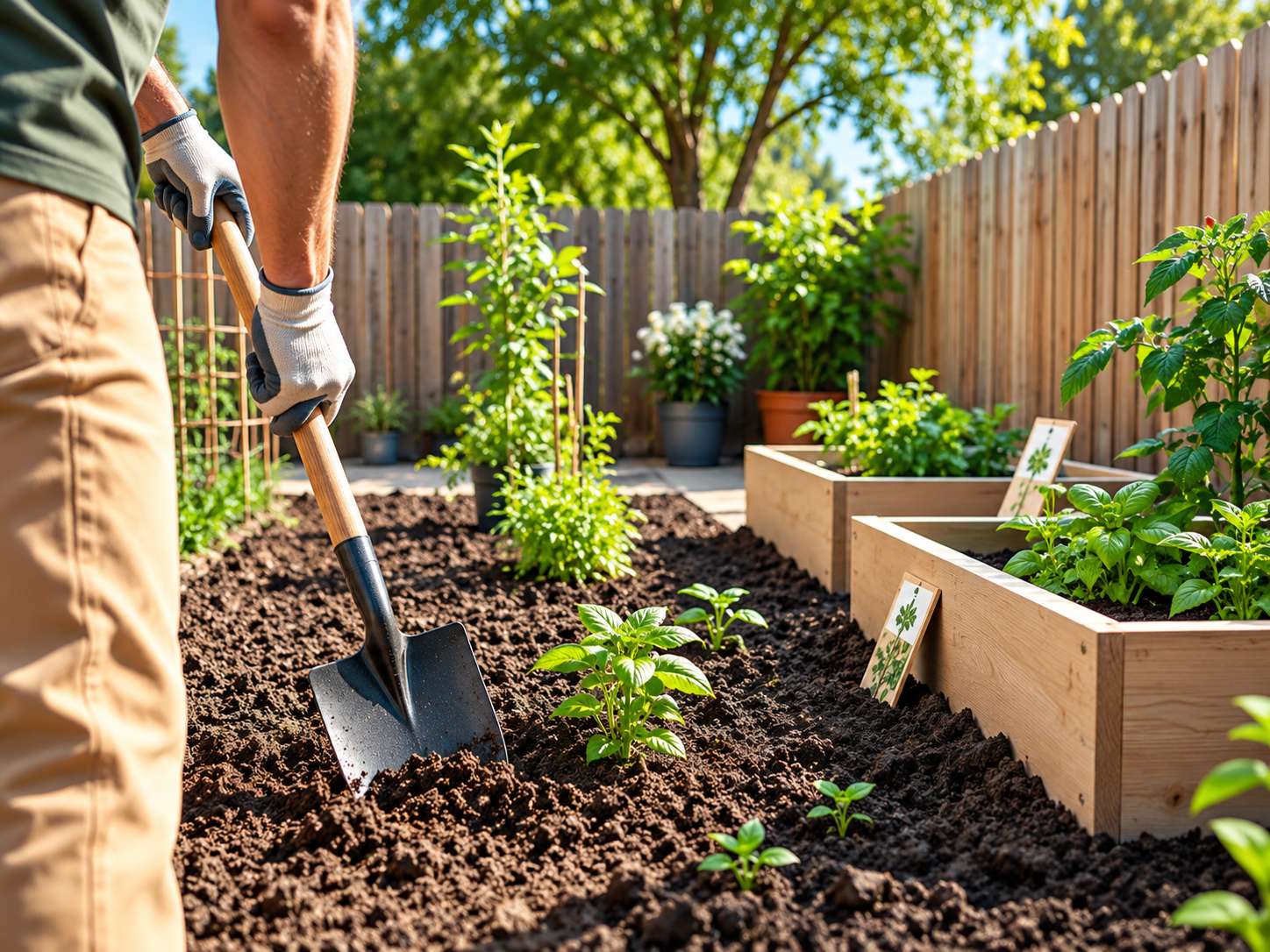
A successful first vegetable garden begins with a sunny, workable site, healthy soil, a short crop list, and a watering plan you can maintain. Start smaller than your available space suggests, prepare the bed before planting, and choose crops that match your climate and growing season.
TL;DR
Key takeaways
- Pick a location with enough sun for the vegetables you want to grow and convenient access to water.
- Test the soil before adding fertilizer or major amendments.
- Begin with a manageable bed and a short list of crops your household will actually use.
- Plant according to local frost dates, soil temperature, and each crop’s cold tolerance.
- Water based on soil moisture and weather, then use mulch to reduce moisture loss and weeds.
Gather the Basic Tools and Materials
You do not need a shed full of equipment to begin. For a small in-ground or raised-bed garden, the core kit is usually a sturdy shovel or spade, garden fork, hand trowel, rake, watering wand or hose nozzle, gloves, and a bucket or basket for moving compost and harvested produce. A hoe is useful if you have several rows, but it is not essential for a tiny bed.
You will also need seeds or transplants, a reliable water source, and enough organic mulch to cover bare soil after seedlings become established. If you are comparing what to buy first, prioritize tools you will use every week and postpone specialty equipment until a recurring task proves you need it.
Before purchasing fertilizer, lime, sulfur, or large quantities of compost, learn what your soil needs. A laboratory soil test provides a better basis for amendment decisions than guessing from color or texture alone.
Step 1: Choose a Site You Can Visit Easily
Place the garden where you will see it often and can reach it quickly with water. Convenience matters because young seedlings, weeds, pest damage, and dry soil are easier to manage when you notice them early.
Most fruiting vegetables need substantial direct sun, while some leafy crops tolerate less. Observe the site rather than relying only on compass direction, because trees, fences, neighboring buildings, and seasonal changes in sun angle can create unexpected shade.
Avoid low spots that stay waterlogged after rain. If the only available area drains poorly, a raised bed may be more practical than repeatedly trying to grow vegetables in saturated soil. Also identify nearby tree roots, underground utilities, septic components, or drainage infrastructure before digging deeply.
Step 2: Test and Understand the Soil
A home texture check can tell you whether soil feels sandy, silty, or clay-heavy, but it cannot replace a laboratory analysis for nutrient recommendations. The University of Minnesota extension explains that soil testing can show pH, organic matter, and nutrient status and help avoid unnecessary fertilizer applications.
Collect samples according to the laboratory’s instructions. If you are unsure how sampling works, review the process for testing garden soil at home before planting and distinguish between simple observations and a formal nutrient test.
Do not work very wet soil. Digging or tilling saturated ground can damage soil structure and create compacted clods that are difficult to correct later. A simple field check is to squeeze a handful: if it forms a sticky mass and smears rather than crumbling, wait for it to dry further.
Step 3: Start With a Small Crop Plan
Choose vegetables based on what you eat, how much space you have, and how long your growing season lasts. Leaf lettuce, radishes, bush beans, herbs, and compact tomatoes can fit smaller gardens, while sprawling squash, melons, and some vining crops need more room unless trellised.
The University of Minnesota’s vegetable planting guide emphasizes crop-specific timing, soil temperature, and frost tolerance. Those details are regional, so use your local cooperative extension or state agriculture resources for planting dates instead of copying a calendar from another climate.
Sketch the bed on paper. Put taller crops where they are less likely to shade shorter plants, leave enough path space to reach the center without stepping on cultivated soil, and reserve room for supports if you plan to grow peas, pole beans, cucumbers, or indeterminate tomatoes.
Step 4: Prepare the Bed Without Overworking It
Remove perennial weeds and obvious debris first. Loosen compacted soil with a fork or spade and incorporate amendments only when they are justified by soil conditions. More compost is not always better, and excess nutrients can create environmental problems or unbalanced plant growth.
If you are creating a new bed over lawn, remove the sod or use an appropriate sheet-mulching method well in advance. Do not bury large quantities of fresh grass or undecomposed material immediately before seeding, because decomposition can temporarily change the root-zone environment.
Rake the surface reasonably level. Fine-seeded crops need a smoother seedbed than large transplants, but there is no need to pulverize the soil into powder.
Step 5: Plant at the Right Time and Depth
Seed packets contain valuable crop-specific information, including planting depth, spacing, days to maturity, and whether a crop is commonly direct-sown or transplanted. Follow those instructions while adjusting timing to local conditions.
Cool-season vegetables can often be planted earlier than heat-loving crops. Tomatoes, peppers, cucumbers, squash, and basil should not be rushed outdoors simply because a few warm days arrive. A late cold spell can damage tender plants.
When transplanting, water seedlings before moving them, handle roots gently, and plant at the recommended depth for that crop. Water the root zone after planting to settle soil around the roots.

Step 6: Set Up a Watering Routine Based on Soil, Not the Calendar
New seeds and transplants need consistent moisture while they establish, but mature plants generally benefit from deeper watering that reaches the active root zone. Sandy soil may need water more often than loam or clay, and raised beds or containers can dry faster than surrounding ground.
Instead of watering automatically every day, check the soil below the surface. The guide on how often to water a garden explains how soil texture, mulch, weather, and plant stage change irrigation frequency.
Water near the soil surface when possible. Wet foliage is not always harmful, but directing water to the root zone is generally more efficient and reduces unnecessary evaporation. Early-day watering is convenient in many climates because leaves that do get wet have time to dry.
Step 7: Mulch After Plants Are Established
A layer of clean organic mulch can reduce evaporation, suppress many annual weeds, and moderate soil temperature. Straw, shredded leaves, or other locally appropriate materials can work well in vegetable beds.
Keep mulch from being packed tightly against tender stems. In cool, wet spring conditions, delay heavy mulching until the soil has warmed enough for heat-loving crops.
Safety and Food-Garden Basics
Know what was previously used on the site. If the soil may contain lead or other contaminants, use an appropriate testing service before growing food directly in it. Wear gloves when handling soil and compost, wash produce before eating, and follow all label directions if you use any pesticide or fertilizer product.
Build Skill One Bed at a Time
A first vegetable garden does not need to be large to be worthwhile. Start with one manageable bed, record what you planted and when, note which areas dried fastest, and use those observations to improve the next season. The best next step is to choose your site, order a soil test if needed, and sketch a crop plan before buying more supplies.
Home and garden information is educational and general. Local climate, soil conditions, pesticide rules, water restrictions, and site safety requirements vary; consult your local cooperative extension or a qualified professional for location-specific guidance.


