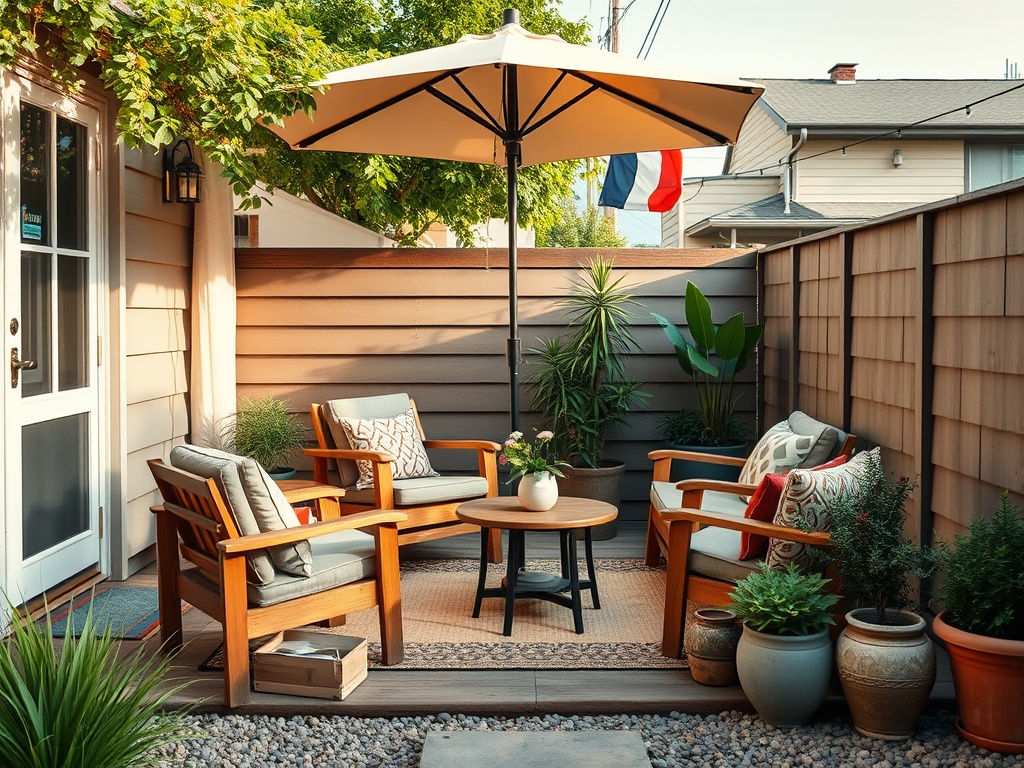
A budget outdoor living room works best when you treat it like a real room: define one comfortable footprint, create reliable seating, add shade and lighting where needed, and use plants or screening for enclosure. Spend first on safety and durable basics, then build atmosphere with movable pieces that can change over time.
TL;DR
Key takeaways
- Choose one small zone instead of furnishing the entire yard.
- Reuse an existing patio, deck, or level gravel area when it is safe and functional.
- Prioritize seating, a stable surface, shade, and task lighting before decorative extras.
- Use containers, trellises, or planting to create privacy without heavy construction.
- Check local rules before building structures, adding electrical work, changing drainage, or using fire features.
Pick the Smallest Space That Meets the Goal
Decide what the space is for: two-person coffee, family meals, reading, casual conversation, or occasional entertaining. A compact layout for four people is usually easier to furnish and shade than a large open patio with scattered furniture.
Measure the area and draw the main circulation route from the house to the yard. Leave clear paths to doors, steps, gates, grills, hose connections, and storage. Furniture should not force people to squeeze between walls or step into planting beds.
A focused layout also makes the budget easier to control because every item must serve the chosen use.
Start With the Surface You Already Have
An existing deck or patio can save most of the construction cost. Clean it, repair loose boards or unstable pavers, and address trip hazards before buying furniture.
If you are creating a new small sitting area, compacted gravel or properly installed pavers may cost less than a large concrete slab. Where drainage is a concern, permeable materials can help rain soak into the ground. The EPA’s permeable pavement guidance explains how permeable surfaces can reduce runoff when designed and installed appropriately.
Do not place a new surface where it redirects water toward the house or neighboring property. Grading and drainage problems can turn a low-cost DIY project into an expensive repair. Where a patio meets turf, water-smart lawn care can help reduce overspray onto hard surfaces.
Use a Simple Furniture Plan
Start with the seats you need most often, not the maximum number needed once a year. Two lounge chairs plus a small bench or compact outdoor sofa may be enough for a household that usually uses the area alone.
Secondhand metal, wood, or resin furniture can stretch a budget if frames are structurally sound. Check for loose joints, sharp rust, cracked plastic, rotted wood, or unstable legs before refinishing.
Use washable outdoor cushions only where you have a dry storage plan. A bargain cushion that stays wet and mildews is not a long-term saving.
Create a Visual Boundary Without Building Walls
A rug rated for outdoor use can define a seating group, but it is optional. The same effect can come from arranging furniture around a low table, using large planters at corners, or placing a bench against a planted edge.
Compare conversation zones, dining arrangements, and circulation paths before buying pieces so the furniture supports the way the area will actually be used.
Keep boundaries flexible in small yards. Movable planters and screens can adapt when the space is needed for a party, children, or seasonal storage.
Add Shade Before More Decor
Shade often improves comfort more than extra accessories. Use existing tree canopy first. A freestanding umbrella can be a lower-cost option than a permanent pergola and can move as the sun changes.
If you attach a shade sail, awning, or structure to a building, confirm anchoring requirements and local codes. Wind loads can turn loosely installed fabric or umbrellas into hazards.
In very sunny spaces, pale or breathable fabrics may feel cooler than dark heat-absorbing materials, though durability and cleanability should guide the final choice.
Light the Paths and Tasks
Outdoor lighting should support safe movement and the activities you actually do. Focus on steps, the entry, a table, or a cooking area rather than trying to make the yard as bright as an indoor room.
The DarkSky principles for responsible outdoor lighting recommend useful, targeted, low-level, controlled, warm-colored light. Shielding and timers can reduce glare and unnecessary light spill.
Electrical additions may require weather-rated equipment, GFCI protection, permits, or a licensed electrician depending on local rules.
Use Plants for Privacy and Softness
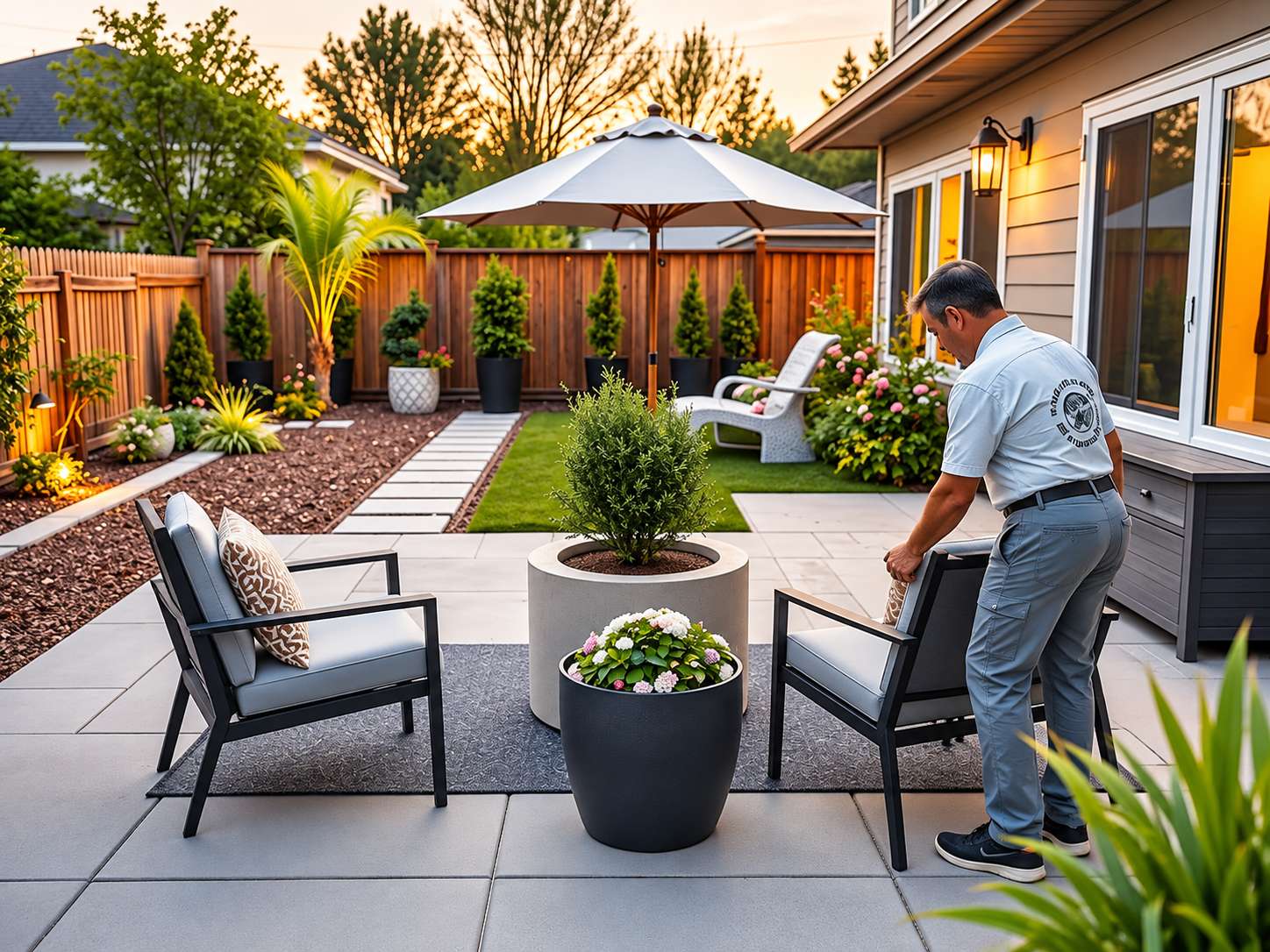
Containers are useful when you rent, have poor soil, or want a layout that can change. Group a few larger pots rather than buying many tiny containers that dry quickly and create visual clutter.
The University of Minnesota Extension’s container-gardening guidance notes that containers need drainage and should be matched to available sunlight. Select plants for the actual exposure, not only for privacy height.
A narrow trellis with a climber can create screening without using as much floor space as a broad shrub. For longer-term planting, the site-planning approach in a low-maintenance front yard design can help match plant size and care needs to the available space.
Make a Low-Cost Table Work Harder
A small outdoor table can serve drinks, meals, games, plants, and laptop work. Instead of buying several side tables, choose one sturdy surface positioned where multiple seats can reach it.
Repurposed furniture should be appropriate for outdoor exposure. Indoor particleboard or poorly sealed composite furniture may fail quickly in moisture. If you refinish wood, use coatings suitable for the material and exterior conditions.
Add Storage Before Clutter Builds
A weather-resistant deck box, storage bench, or lidded tub can hold cushions, throws, small tools, and candles. Built-in storage is not necessary unless the layout is permanent.
Keep flammable materials away from grills, heaters, fire pits, and electrical equipment. Follow manufacturer clearances and local fire rules for any heat or flame feature.
If budget is tight, skip a fire feature entirely. Comfort can come from blankets, wind protection, lighting, and seasonal use without adding combustion risk.
Shop in Phases
Phase one is function: safe surface, enough seating, and shade. Phase two adds a table, lighting, and privacy. Phase three is decoration such as pillows, planters, and seasonal accents.
This order prevents decorative purchases from consuming money needed for repairs or weather protection. It also lets you observe how the space is used before committing to larger pieces.
Track dimensions on your phone while shopping secondhand so a cheap chair does not become an expensive mistake because it blocks a doorway or overwhelms the patio. A basic beginner garden-tool list can also prevent overspending if containers and planting are only one part of the project.
Avoid Common Budget Traps
Do not buy a full matching set simply because it appears discounted. Sets can include extra pieces and may not fit the available footprint. Avoid flimsy shade structures in exposed windy locations and furniture that has no dry-season storage plan.
Be cautious with very large outdoor rugs over damp surfaces because they can trap moisture or hide deterioration. Check the surface regularly and clean underneath.
Also avoid installing permanent hardscape before watching how rain drains across the yard. A pretty seating area should not create runoff problems.
Build the Room Around How You Live
A budget outdoor living room feels complete when it has a clear purpose, comfortable seating, a stable surface, shade, safe lighting, and enough enclosure to feel intentional. Start with the smallest usable zone, make one or two durable purchases, and add movable details only after the basic layout proves itself.
Home and garden information is educational and general. Structural work, electrical installations, drainage changes, fire features, and property modifications may be governed by local codes, permits, lease terms, HOA rules, or manufacturer requirements; consult qualified professionals when appropriate.