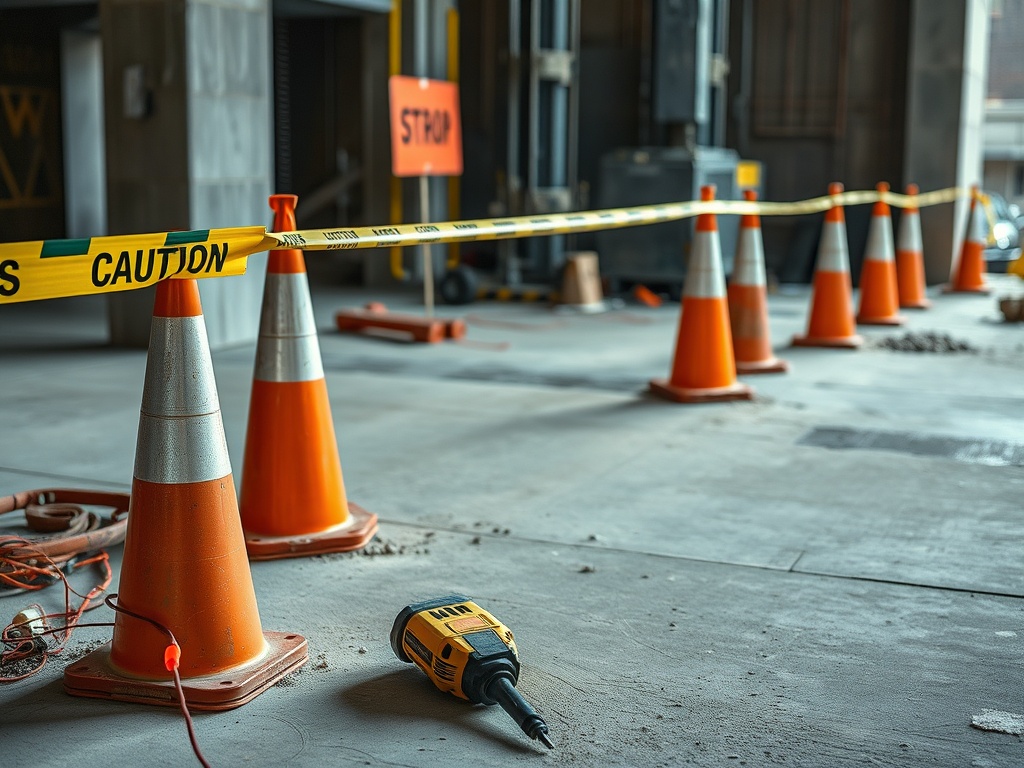
A good incident report captures what happened, protects people, preserves facts, and drives corrective action. After a near miss or injury, speed matters, but accuracy and a no-blame learning process matter just as much.
Key takeaways:
- First protect people, secure the scene, and get medical help if needed.
- Report serious events according to applicable laws, contracts, and company procedures.
- Gather facts before memories fade, but avoid jumping to blame.
- Use root-cause thinking to correct conditions, training gaps, equipment issues, and process failures.
Start With Care and Control
The first priority is always people. Stop work if needed, make the area safe, call emergency services when appropriate, and prevent secondary incidents. Secure energy sources, falling-object risks, traffic, equipment movement, or environmental hazards before beginning paperwork.
Reporting obligations vary by jurisdiction and employer. In the United States, OSHA’s fatality and severe injury reporting page states that employers must notify OSHA within defined time frames when a worker is killed on the job or suffers a work-related hospitalization, amputation, or loss of an eye. Separate OSHA recordkeeping requirements may also apply. Contractors should follow their safety program, contract requirements, owner requirements, insurer instructions, and local regulations.
Capture Facts While They Are Fresh
An effective report should include date, time, location, weather or environmental conditions when relevant, task being performed, people involved, witnesses, equipment, materials, photos, immediate actions, injury status if applicable, and what changed before the event. For a near miss, describe what could have happened and what prevented harm.
Do not let the report become a blame note. Words like “careless” or “should have known” may hide deeper causes. Better questions include: Was the work planned? Were hazards identified? Was the tool suitable? Was training current? Were guards or fall protection available and used? Were schedule pressures involved? Was the area congested? Were instructions clear?
What to Include in the Report
| Report Element | Why It Matters |
|---|---|
| Immediate response | Shows how people and hazards were protected |
| Task and location | Connects the incident to real work conditions |
| Equipment and materials | Helps identify tool, maintenance, or compatibility issues |
| Witness statements | Captures perspectives before memories shift |
| Photos and sketches | Preserves conditions that may change quickly |
| Root causes | Moves the review beyond the direct trigger |
| Corrective actions | Creates accountability for prevention |
| Verification | Confirms actions were completed and communicated |
OSHA’s incident investigation guidance emphasizes identifying underlying or root causes so employers can develop effective corrective actions and prevent similar events. That is the difference between filing a form and improving the safety system.
Near Misses Deserve Attention
Near misses are valuable because they show weak controls before an injury occurs. A dropped object that misses a worker, a ladder that shifts without a fall, a tool that misfires, a trench edge that sloughs, or a vehicle that nearly strikes a pedestrian should not be ignored simply because no one was hurt.
A strong near-miss process should be easy to use. Workers should know how to report, supervisors should respond without retaliation, and corrective actions should be visible. When crews report hazards and see nothing change, reporting fades.

Corrective Actions Should Match Root Causes
Corrective actions often fail because they only tell people to “be careful.” A stronger action changes the condition or system. Examples include replacing a defective tool, revising a lift plan, adding edge protection, improving lighting, changing delivery routes, retraining a crew, updating a job hazard analysis, or modifying a schedule that created unsafe overlap.
Tool-related incidents should also feed procurement and training decisions. The practical selection points in choosing fastener tools for wood, steel, and concrete are safety-related because the wrong tool, bit, fastener, or base-material assumption can create hazards.
Communication After the Report
After immediate reporting, share lessons with the right audience. A short toolbox talk may work for a simple near miss, while a serious injury may require a formal stand-down, owner notification, insurer coordination, and documented retraining. Protect private medical information and personal details. The lesson should focus on the work process, hazard, and control.
Occupied renovations need special communication because incidents can affect building users. The planning practices in occupied renovations for offices, schools, and healthcare spaces help teams think through emergency routes, occupant notices, shutdowns, and safe separation.
Make the Report Useful, Not Just Filed
Before closing an incident, confirm that corrective actions were assigned, completed, and checked in the field. Update job hazard analyses, pre-task plans, equipment inspection routines, or site logistics if needed. If the incident reveals a budget or scope gap, document it honestly. Even residential projects can benefit from the clarity discussed in budgeting for an addition because uncertainty, rushed changes, and unclear responsibilities often contribute to risk.
The goal of incident reporting is not paperwork. The goal is to learn fast enough that the same conditions do not hurt someone later.
A Practical Investigation Timeline
A simple timeline keeps the investigation organized. During the first minutes, protect people and control immediate hazards. During the first hour, notify the right people, preserve the scene when safe, and collect initial witness information. During the same shift, gather photos, equipment details, task plans, permits, training records, and environmental conditions. Within the next review period, analyze root causes, assign corrective actions, and communicate lessons to affected crews. Finally, verify that actions were completed in the field, not only written on a form.
For near misses, the timeline can be shorter, but the same logic applies. Fast learning is the point. If the team waits until the end of the week, temporary conditions may be gone, tools may be moved, and witness memory may shift.
Protect the Reporting Culture
Workers are more likely to report near misses when they believe the process is fair. Supervisors should thank people for reporting, separate discipline from fact-finding unless misconduct is clear, and explain what corrective action followed. A silent response teaches crews that reporting is pointless. A blame-heavy response teaches them that reporting is risky. Neither outcome improves safety.
For serious events, preserve privacy as well as facts. Medical details should be limited to those with a legitimate need to know, while the broader team receives the safety lesson, hazard, and corrective action. This balance supports learning without turning the report into gossip.
Close the loop with crews so they know which controls changed and why the change matters.
This article is for educational use only and is not professional safety, legal, regulatory, insurance, medical, or project management advice. Follow applicable laws, company programs, and qualified safety guidance for specific incidents.