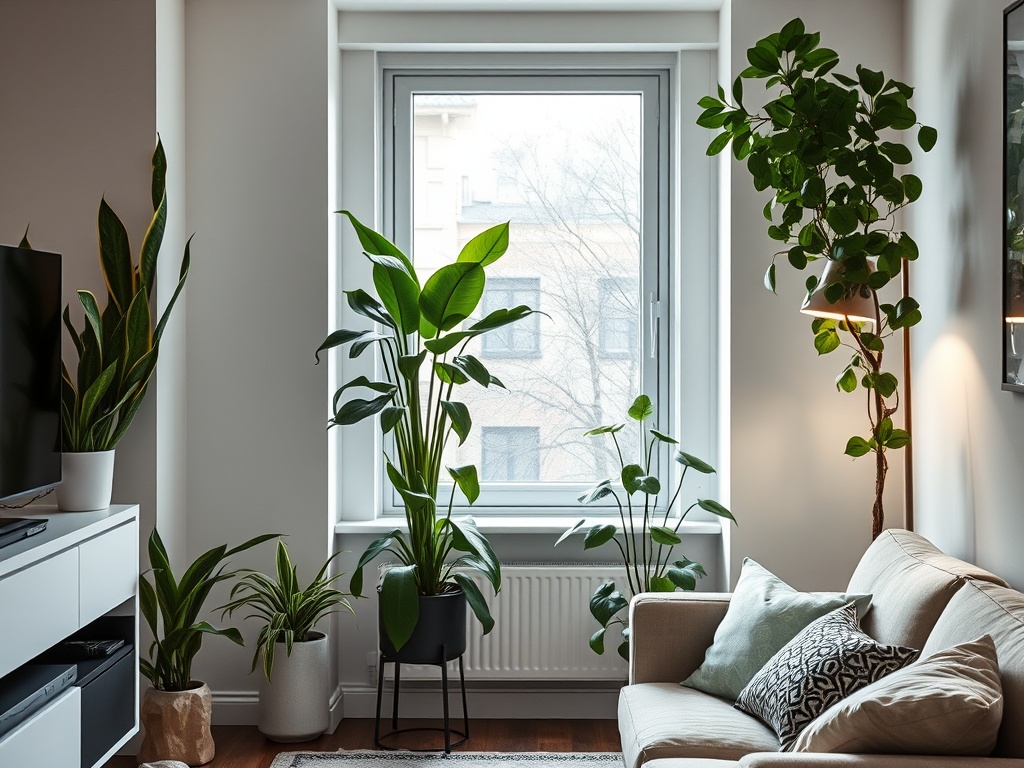
Low-light apartments can support healthy houseplants, but “low light” does not mean “no light.” The best choices are foliage plants that tolerate indirect light, slower growth, and less frequent drying than sun-loving species.
TL;DR
Key takeaways
- Start with a snake plant, pothos, ZZ plant, Chinese evergreen, cast iron plant, parlor palm, or peace lily when natural light is limited.
- Match the plant to the actual window exposure rather than choosing by appearance alone.
- In dim rooms, plants generally grow more slowly and use water more slowly, so overwatering is often a bigger risk than underwatering.
- A small grow light can expand your options if the apartment is too dark for consistent plant growth.
First, Decide What “Low Light” Means in Your Apartment
Before buying a plant, watch the room for a full day. A north-facing window, a spot several feet from a brighter window, or a corner that receives mostly ambient daylight may all count as low-light conditions, but they are not equally bright. The University of Minnesota Extension’s indoor-lighting guidance recommends choosing plants according to the light that is actually available and notes that low-light plants still need usable light for photosynthesis.
A practical test is to ask whether the room stays naturally bright enough to move around comfortably without switching on lamps during daytime. If the area feels gloomy even at noon, a plant may survive for a while but decline gradually. In that situation, place the plant closer to a window or use supplemental lighting rather than relying on a “low-light” label.
Low-light tolerance also describes survival and steady foliage growth, not necessarily fast growth or frequent flowering. A plant that looks fine in a shaded corner may grow more densely if moved to brighter indirect light.
A Shortlist of Apartment-Friendly Low-Light Plants
The following plants are commonly listed for lower indoor light by horticultural extension sources. Their real performance still depends on temperature, watering, container drainage, and how low the light actually is.
| Plant | Best Fit | Maintenance Feel | Standout Feature |
|---|---|---|---|
| Snake plant | Busy owners and narrow spaces | Low | Upright growth uses little floor space |
| Pothos | Shelves and hanging planters | Low to moderate | Trailing stems are easy to position |
| ZZ plant | Rooms that dry slowly | Low | Thick leaves and stems suit infrequent watering |
| Chinese evergreen | Tabletop or floor pots | Moderate | Dense foliage in many leaf patterns |
| Cast iron plant | Shady corners with floor space | Low | Tough-looking foliage and slow growth |
| Parlor palm | Soft vertical greenery | Moderate | Feathery texture without a huge footprint |
| Peace lily | People willing to monitor moisture | Moderate | Broad foliage with occasional flowers in adequate light |
This is a use-case comparison, not a performance ranking. Individual plants within the same species can respond differently to a particular apartment, and nursery size or potting mix can change how often they need attention.
If you are building a larger indoor plant setup, supplemental lighting can help you decide whether to improve the environment instead of repeatedly replacing plants.
Best Overall for Neglect: Snake Plant
Snake plants are a strong starting point for apartments because they stay relatively compact, grow upright, and tolerate lower light. Their architectural form works beside a desk, bed, sofa, or entry console where a trailing plant would be inconvenient.
Their main care trap is water. Lower light slows water use, so the potting mix can remain damp longer than expected. Use a container with drainage and check the potting mix before watering again. A rigid schedule such as “every Saturday” is less reliable than observing how quickly the mix dries in your home.
Snake plants are often chosen because they look substantial without demanding frequent pruning. If you prefer a plant that can stay visually tidy with minimal shaping, this is one of the simplest options on the list.
Best for Shelves: Pothos
Pothos suits apartments where floor space is limited. Its trailing stems can grow from a shelf, cabinet, hanging planter, or tall plant stand, and the vines can be trimmed when they become too long.
In lower light, expect slower growth and less dramatic variegation in some cultivars. Brighter indirect light usually supports fuller growth, so a shelf near a window may perform better than a deep interior wall. If the stems become stretched with wide gaps between leaves, insufficient light may be part of the problem.
Pothos also makes it easy to inspect leaves closely, which matters because indoor pests can spread between nearby plants. If a plant develops sticky residue, webbing, speckled leaves, or visible insects, isolate the affected pot while you identify the cause.

How to Compare Maintenance Before You Buy
Look past the plant label and compare five practical factors: mature size, growth habit, pot size, drying speed, and the amount of pruning or cleanup you are willing to do. A small pothos may be easy at first but can eventually need trimming. A cast iron plant grows slowly but may require more floor space. A peace lily may need closer moisture monitoring than a snake plant in the same apartment.
The potting medium matters too. Dense mixes can stay wet for long periods indoors. If a plant remains damp for many days, review whether the medium and container drain appropriately before repotting. The goal is not to use the driest possible mix but to create a root environment that suits the plant and container.
When comparing plants at a nursery, inspect the leaves, stems, soil surface, and drainage holes. Avoid plants with widespread yellowing, obvious pests, collapsed stems, or a sour-smelling saturated mix unless you are intentionally taking on a rehabilitation project.
When a Grow Light Is the Better Purchase
If every potential plant location is far from a window, a modest grow light may be more useful than searching for an ultra-tolerant species. Supplemental lighting can turn an unreliable corner into a stable growing area and can help keep plants from becoming sparse or leggy.
Choose a fixture designed for plant growth, follow the manufacturer’s distance and duration guidance, and watch the plant’s response. Light that is too weak may do little; light that is too close can stress foliage. A timer can make the routine more consistent.
Common Low-Light Houseplant Mistakes
The most common mistake is treating “tolerant” as “indestructible.” Plants still need light, oxygen around roots, reasonable temperatures, and appropriate moisture. Another frequent issue is watering every plant on the same day even though different pots dry at different rates.
Also avoid making a diagnosis from one symptom. Yellow leaves, brown tips, drooping, and leaf drop can each have several causes. If insects or mites are suspected, the UC Statewide IPM houseplant guidance recommends correct identification before choosing a control method and isolating affected plants to reduce spread.
Choose the Plant That Fits the Room, Not Just the Photo
For most low-light apartments, snake plant, pothos, and ZZ plant are the easiest starting points, while Chinese evergreen, cast iron plant, parlor palm, and peace lily offer different shapes and care rhythms. Pick one based on the light you can provide and the maintenance you will realistically do, then observe it for several weeks before expanding your collection. If you are also moving into outdoor gardening, starting a vegetable garden from scratch and learning how often to water a garden provide useful next steps for a different growing environment.
Home and garden information is educational and general. Plant care can vary by species, cultivar, indoor environment, and local conditions; consult a qualified horticulture professional when a plant-health issue is persistent or difficult to identify.


