Cluster: Rooms, Rates & Accommodation Selection | Search intent: Informational | Audience: Beginner | Funnel: Top of Funnel
Hotel room categories are labels used to distinguish accommodations by bed setup, size, layout, view, floor or location, included access, and special features. These names are not standardized across the industry, so the safest approach is to compare the room's verified attributes instead of assuming terms such as deluxe, superior, executive, or junior suite mean the same thing everywhere.
TL;DR: Decode the room in layers: sleeping setup, maximum occupancy, physical layout, view or location, accessibility features, and any privileges attached to the category. If one attribute is essential, confirm it in the official room description or directly with the hotel rather than relying on the category name.
Room names are marketing labels built on real attributes
A hotel might sell standard, superior, deluxe, premium, club, junior suite, suite, family room, or villa categories. The progression sounds clear, but the actual differences can vary: a larger room, a better view, a higher floor, newer furnishings, lounge access, a balcony, or simply a different bed arrangement. The name is useful only after you identify the feature behind it.
This is different from overall property classification. hotel categories explains labels such as resort, extended-stay, airport hotel, and luxury hotel. Room category answers 'Which accommodation inside this property?' while hotel category answers 'What kind of property is this?'
Start with beds and occupancy, then move to upgrades
The first check is the sleeping arrangement: one king bed, one queen, two queens, twins, sofa bed, bunk bed, rollaway possibility, crib policy, or a combination. Maximum occupancy is a policy, not proof that the beds work for your group. A room that permits four guests may provide two beds, one bed plus a sofa, or another setup entirely.
Families and groups should also confirm whether connecting or adjoining rooms are guaranteed or only requested. A request noted on a reservation may not be the same as a confirmed room feature. If sleeping arrangement matters, prioritize a category that explicitly matches it.
View labels should be translated into geography
City view, garden view, pool view, partial ocean view, ocean view, and oceanfront may sound self-explanatory, yet properties use them differently. A view category describes what can be seen, while a location category can describe where the room sits. A room can be closer to the beach but have a limited view, or higher up with a better view but a longer route to facilities.
Ask for a property map when location affects mobility, noise, or daily plans. Do not infer that a higher-priced view is objectively better; it is an upgrade only if the view is valuable to you.
Suites describe layout, but not always the same kind of separation
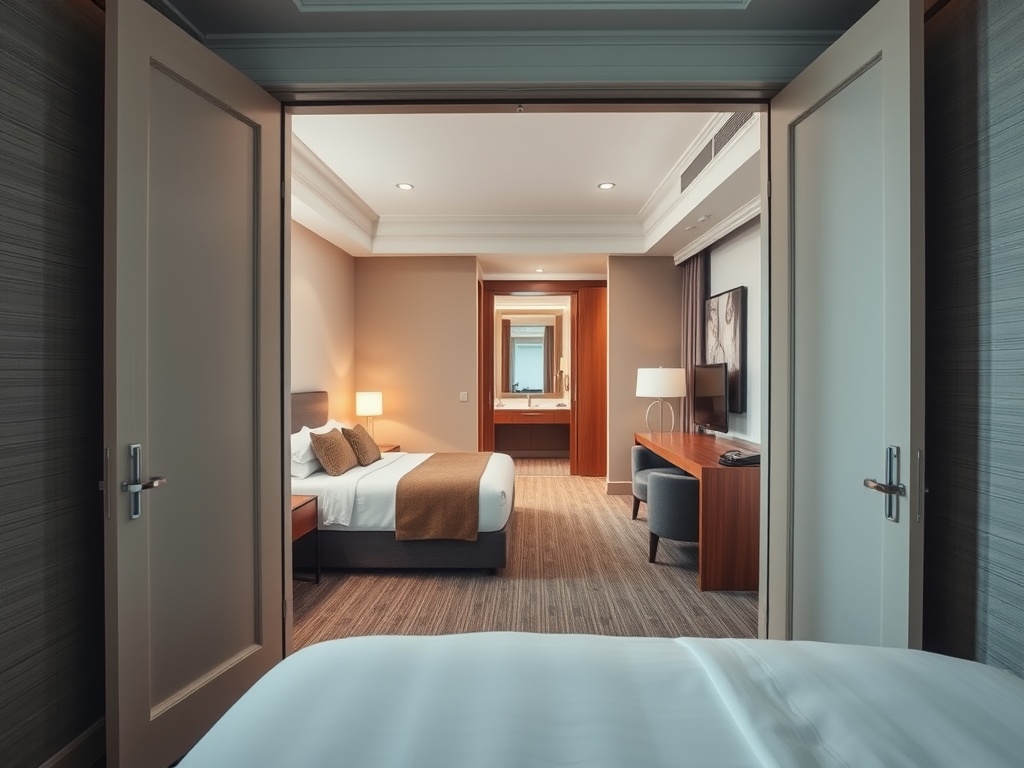
A suite may have a separate living room, a partly divided sitting area, multiple bedrooms, or simply more floor space, depending on the property. 'Junior suite' often signals more space or a sitting area, but it does not reliably mean a separate room. Look for floor plans, door separation, bathroom count, and exact bedding when privacy or working space matters.
If the trip is price-sensitive, compare the utility of that layout with budget hotel value. Paying more for extra space can be good value for a family or long stay, but unnecessary for a traveler who uses the room mainly to sleep.

Accessible rooms are a functional category, not a generic upgrade
Accessible rooms can include specific mobility or communication features. In the United States, the ADA lodging guidance describes obligations for covered places of lodging and access for guests with disabilities. Travelers should verify the exact features required for their stay because 'accessible' can encompass different room and bathroom configurations.
Do not book an accessible room based only on a broad filter if a particular feature is essential. Confirm the roll-in shower or tub setup, grab-bar arrangement, bed clearance, visual or audible alerts, door widths, and route to hotel facilities as relevant. Requirements differ internationally, so use local standards and direct property confirmation for overseas travel.
Club, executive, and premium rooms may bundle access
Some room categories include lounge entry, breakfast, refreshments, private check-in, concierge support, or a dedicated pool area. Those benefits can be useful for business or leisure travelers, but the same label can mean different things across brands. Check whether access is per room or per guest, whether children are allowed at all times, and which services are included.
When the main benefit is service rather than physical room size, judge the premium by the specific access and service features it adds rather than by the executive or club label alone.
Booking timing matters most for scarce configurations
Standard rooms often have the greatest inventory, while connecting rooms, multi-bedroom suites, accessible layouts, and specific view categories may be limited. That does not guarantee they will sell out, but it increases replacement risk when your dates are fixed. The framework in hotel booking windows can help you decide when to secure a category that would be difficult to replace.
When comparing booking channels, check that the room name and attributes match exactly. Two sellers may use slightly different display names for the same inventory, or the same broad label for different packages. The bed type, occupancy, cancellation terms, and included benefits are more reliable comparison fields.
Photographs help, but floor plans answer different questions
Wide-angle photography can make a room easier to understand visually, but it can also make spaces feel larger than they are. A floor plan, when available, is better for checking separation, door placement, bathroom access, and how furniture fits. Published square footage or square meters can help compare size, but layout still determines how usable that area feels.
When no floor plan is published, ask the hotel a concrete question such as whether the living area is separated by a closing door instead of asking whether the suite is 'spacious.'
Requests and guarantees should be separated
Guests commonly request a high floor, quiet room, early check-in, crib, particular building, or rooms near each other. Hotels may note those preferences without guaranteeing them. By contrast, a booked room category, paid bed type, or confirmed accessible feature may carry a stronger reservation commitment depending on the property's terms and booking channel.
Before travel, review the confirmation and identify which details are contractual and which are requests. If a requested feature is essential, contact the hotel and ask whether it can be confirmed or whether a different category is required.
Book the attributes that matter, not the name
The easiest way to avoid room-category disappointment is to rewrite the category as a feature list: beds, occupancy, layout, view, location, access privileges, and accessibility. Once those are clear, the marketing label becomes much less important.
Before paying, confirm the one or two room attributes that would be hard to fix after arrival. A room category is useful shorthand, but your booking should be based on the accommodation you can verify.