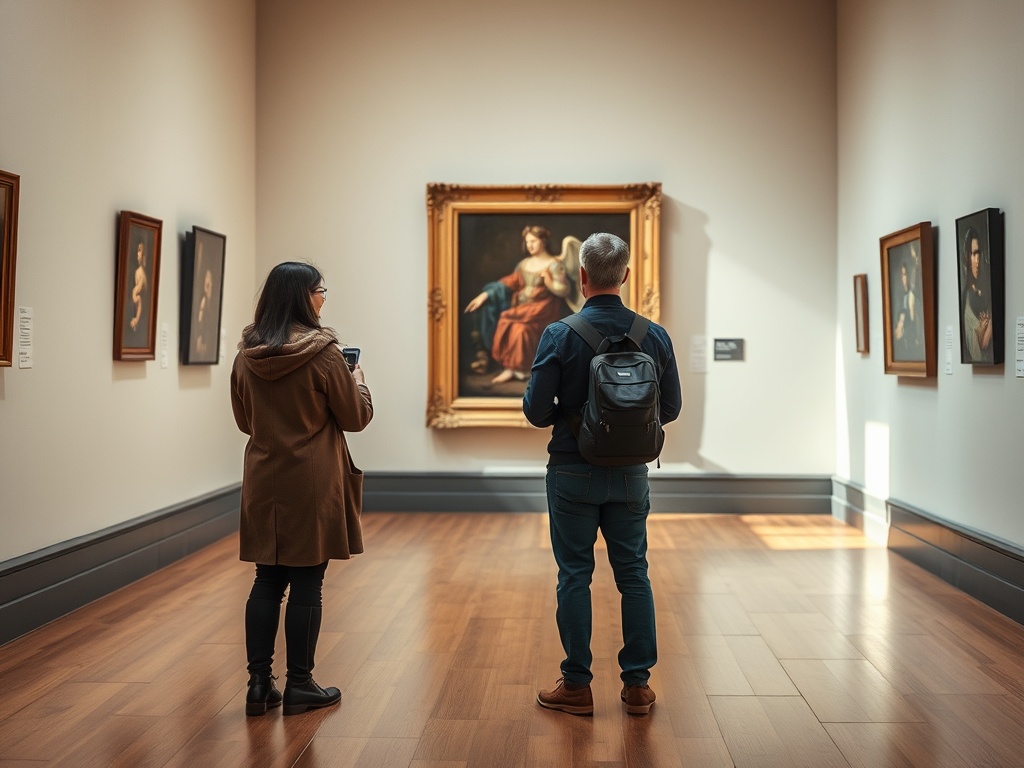
Start looking at paintings more carefully by slowing down, describing what you see before interpreting it, and choosing fewer works per visit. A careful museum visit is not about covering every gallery; it is about giving a few paintings enough attention to answer back.
Quick Takeaways for Slower Museum Looking
- Pick three to five paintings, not an entire floor, as the goal for one visit.
- Look first, then read the wall label. Description should come before interpretation.
- Use prompts about color, line, composition, material, scale, and mood.
- Measure success by sharper noticing and stronger memory, not by the number of artworks seen.
Trade Coverage for Attention
Many museum visitors move too fast because they feel they should see everything. That pressure makes paintings blur together. Careful looking begins with permission to see less. Choose a room, a period, or even one wall, then spend real time with a few works.
The National Galleries of Scotland’s how to look at art resources use prompts such as close looking, senses, and “see, think, wonder.” That kind of prompt is useful because it starts with observation rather than expert vocabulary.
If you are trying to build a broader arts habit, the same low-pressure approach can pair with a beginner-friendly theater routine so that museums and performances both feel more accessible.
Use the First Minute for Description Only
Before reading the label, stand where you can see the whole painting. Spend one minute naming visible facts: colors, shapes, figures, objects, light direction, setting, brushwork, edges, and scale. Avoid “beautiful,” “sad,” “important,” or “boring” for the first minute. Those words are reactions, not observations.
This matters because interpretation gets stronger when it rests on evidence. If you later think the painting feels tense, you can point to crowded composition, sharp diagonals, dark colors, or a figure’s posture. Your opinion becomes more precise because your eyes did the work first.
| Looking layer | Question to ask | What it can reveal |
|---|---|---|
| Subject | What is shown? | Narrative, genre, symbols |
| Composition | Where does your eye go first? | Balance, tension, emphasis |
| Color and light | What changes across the surface? | Mood, depth, focus |
| Material | Can you see brush marks or texture? | Process, speed, revision |
| Scale | How does your body relate to the work? | Intimacy, power, distance |
Read the Label as a Second Conversation
Labels are helpful, but they are not the painting. After your first look, read the artist, title, date, medium, and short description. Then look again and ask what changed. The National Gallery in London compares reading a painting to reading a book in its guide to reading paintings, but paintings also differ from books because your eye can move in many directions at once.
If the label mentions a myth, historical event, patron, or technique, return to the surface and find the evidence. Do not let the label replace seeing. Let it send you back to the image with sharper questions.
Try a Ten-Minute Painting Study
For one painting, divide ten minutes this way. Spend two minutes looking from far away. Spend two minutes on the center and edges. Spend two minutes on color and light. Spend two minutes reading the label and checking one detail. Spend two minutes writing a note or talking quietly with a companion.
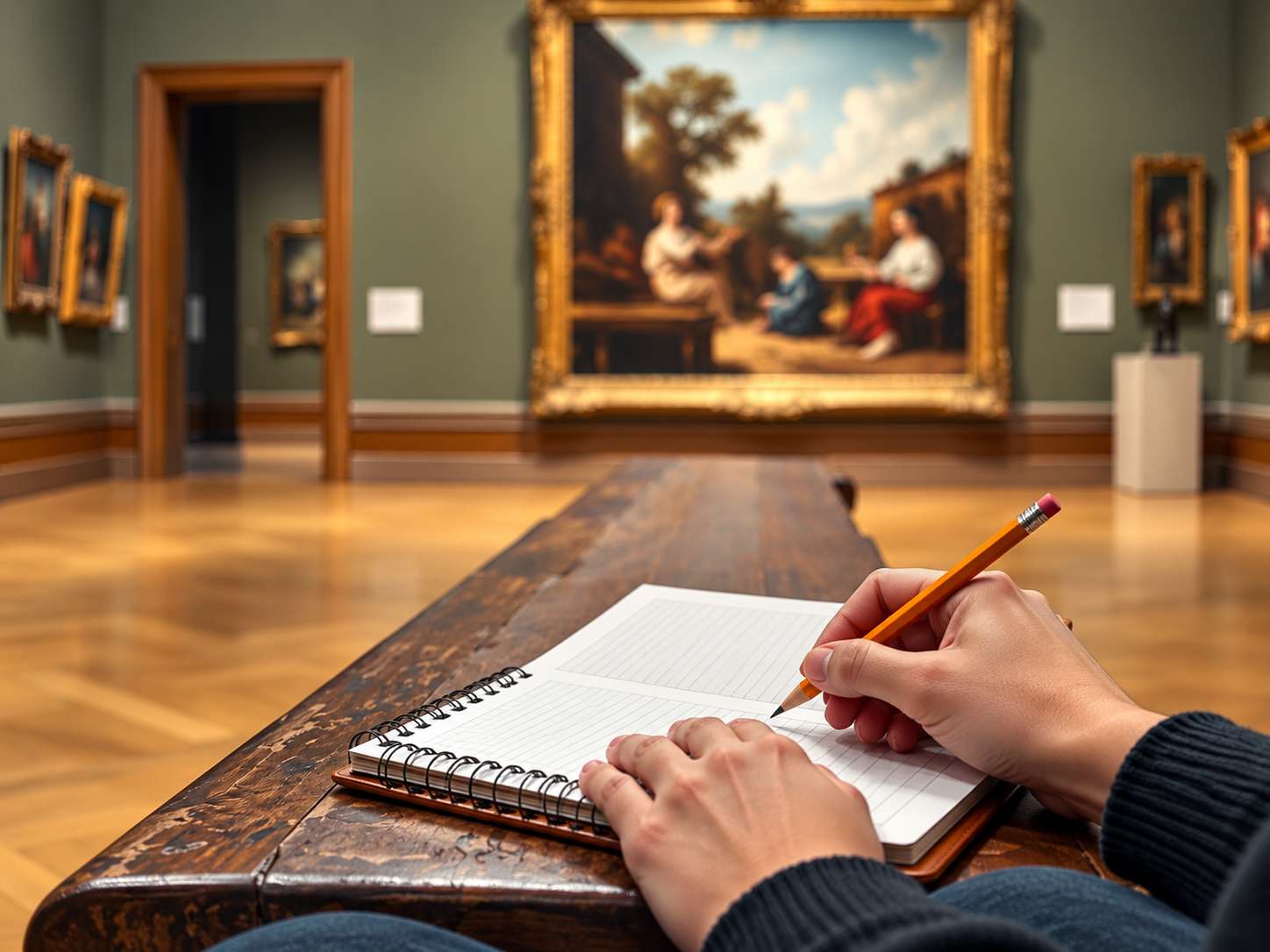
The Museum of Fine Arts, Houston offers a four-step practice built around looking, describing, connecting, and wondering. That sequence is helpful for adults as well as students because it keeps interpretation grounded in what the artwork actually gives you.
If careful looking inspires you to make images of your own, studying light before gear in photography is a natural next step.
Mistakes That Flatten a Museum Visit
- Reading every wall label before looking at the work.
- Photographing paintings as proof of attendance instead of spending time with them.
- Trying to see an entire museum in one visit.
- Assuming you need art-history knowledge before you can have a valid response.
- Treating personal dislike as the end of looking rather than the start of a question.
Careful looking does not require pretending every painting moves you. If a work leaves you cold, ask why. Is it the subject, palette, scale, style, or museum fatigue? That question teaches taste without dismissing the work too quickly.
When Solo Looking Works and When a Guide Helps
Solo looking is best when you want quiet attention. A friend can help if they are willing to describe what they see rather than rush. A docent tour or audio guide helps when you want historical context, but use it selectively. Too much narration can make the visit feel passive.
For complex religious, mythological, or political paintings, a guide can prevent frustration. For portraits, landscapes, still lifes, and abstract works, you can often begin with visual evidence and add research later.
Give yourself one repeat visit within a few months. The second museum trip is often easier because the building no longer feels new. You know where to enter, how long you like to stay, and what kind of gallery makes you slow down. Familiarity frees attention for the art itself.
A small sketch can help, even if you do not draw well. Copy the main shapes as boxes, arrows, and circles. The sketch is not art; it is a way to prove where your eye traveled.
Leave With One Painting You Remember Clearly
At the end of the visit, choose one painting and write three details from memory before checking your photo or notes. If you can recall the light, a gesture, a color relationship, or a strange object, your looking improved.
A focused museum exercise is to visit one gallery with a three-painting limit. Give each work enough time to become specific. A museum becomes friendlier when you stop treating it like a checklist and start treating it like a series of encounters.