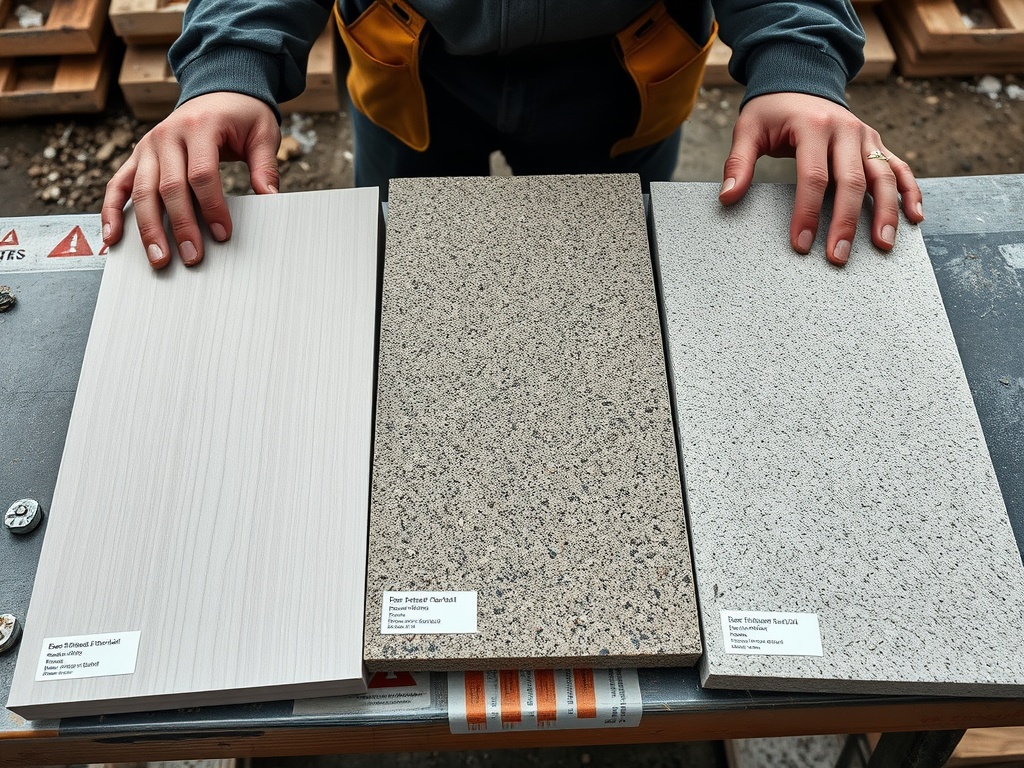
EIFS, stucco, and fiber cement can all perform well when designed, installed, and maintained for the building, climate, exposure, and detailing. The best choice depends on moisture control, impact risk, appearance goals, repair access, code requirements, and the owner’s maintenance discipline.
Key takeaways:
- EIFS is an insulated, layered exterior finish system and is sensitive to drainage, impact, and sealant details.
- Stucco is a cement-based cladding that can be durable but needs movement control, crack monitoring, and water management.
- Fiber cement panels or siding are manufactured cladding products that rely heavily on attachment, clearances, flashing, and joint detailing.
- No cladding system removes the need for inspections, sealant upkeep, and moisture control.
Understand the Wall, Not Just the Finish
Cladding is only one part of the exterior wall. The assembly also includes structure, sheathing, air barrier, water-resistive barrier, insulation, flashings, transitions, openings, sealants, and drainage paths. EPA’s moisture control guidance for building design, construction, and maintenance is a useful reminder that walls, roofs, foundations, plumbing, HVAC, and site drainage all affect moisture outcomes.
That matters because many cladding failures are not caused by the face material alone. Water can enter at windows, parapets, deck connections, penetrations, kick-out flashing, roof-wall intersections, or sealant joints. The visible symptom may be a stained panel or cracked finish, while the root cause sits several feet away.
Side-by-Side Comparison
| Factor | EIFS | Traditional Stucco | Fiber Cement |
|---|---|---|---|
| Basic makeup | Insulation board, base coat, reinforcing mesh, finish coat | Cement plaster over lath or masonry substrate | Manufactured boards, panels, or siding pieces |
| Moisture strategy | Drainage EIFS and properly detailed transitions are critical | Drainage plane, weep screed, control joints, curing, flashing | Backside drainage, clearances, flashing, joint treatment |
| Impact concerns | Can be vulnerable in high-abuse areas without added protection | More impact resistant than many finishes, but cracking can occur | Depends on product thickness, support, and impact exposure |
| Upkeep focus | Sealants, penetrations, impact damage, finish condition | Cracks, sealants, staining, drainage, paint or coating condition | Joints, fasteners, clearances, paint/coating, panel damage |
| Best-fit tendency | Insulation value and continuous finish appearance | Monolithic cementitious appearance | Durable modular cladding with replaceable components |
EIFS: Strengths and Cautions
Exterior insulation and finish systems can support continuous exterior insulation and design flexibility. The International Masonry Institute describes EIFS as an exterior wall cladding made from an assembly of components, including rigid insulation board and synthetic plaster finish. See its overview of plaster, stucco, and EIFS construction for a trade-focused explanation.
The caution is that EIFS is a system, not a paint-like coating. Substrate prep, drainage design, termination details, reinforcing mesh, sealants, backwrapping, and penetrations matter. In high-traffic areas, added impact resistance or separate wall protection may be needed. Where EIFS meets pavement, roofs, balconies, decks, signs, railings, or exterior fixtures, maintenance teams should watch for damage and water paths.
Stucco: Durable, But Not Maintenance Free
Traditional stucco has a long history and can provide a tough cementitious exterior. It still needs thoughtful detailing. Control joints, substrate movement, curing, lath installation, weep screeds, flashings, and drainage all affect performance. Hairline cracks may be cosmetic, but wider, active, stained, or repeated cracks deserve closer review because they may signal movement or water entry.
Stucco can be repaired, but patch visibility depends on texture, color, age, exposure, and workmanship. Owners should not assume a repair will disappear. A mockup or sample repair can help set expectations before work proceeds across a visible elevation.
Fiber Cement: Modular and Practical When Detailed Correctly
Fiber cement is often selected because it offers manufactured consistency, familiar installation formats, and the possibility of replacing individual boards or panels. Performance depends on clearances, fastening, joint treatment, paint or coating systems, back ventilation or drainage space where required, and flashing around openings. Manufacturer instructions and local code requirements must be followed.
Fiber cement can be a practical choice in areas where owners want a panelized or siding appearance, but it is not immune to water problems. Poor clearances at roofs, decks, or grade can shorten service life. Fasteners, joints, and exposed edges need attention during inspections.

Upkeep Is the Real Differentiator
Long-term performance often comes down to inspection routines. Owners should document elevations, exposure, sealant age, crack patterns, impact zones, drainage paths, staining, and past repairs. High-traffic public entries, schools, hospitals, and service yards may need added protection at corners, lower walls, and doors. The product planning covered in wall protection for hospitals, schools, and corridors applies outside as well when carts, equipment, and people repeatedly contact surfaces.
Quality documentation also matters. If a cladding problem appears, teams need to know what was specified, which submittals were approved, which mockups were accepted, and what field tests were completed. That is why construction QA and QC belongs in cladding selection, not only in closeout paperwork.
Choosing a Cladding Strategy With Eyes Open
A careful comparison should consider climate, wall design, exposure, fire and code requirements, aesthetics, impact risk, repair access, installer qualifications, warranty terms, and maintenance capacity. Historical maintenance records can make the decision stronger. If previous elevations had repeated sealant failures, water intrusion, or impact damage, that information should feed future estimates and product choices. The discipline described in using historical job data is useful for this type of asset decision.
The practical takeaway is simple: select the assembly you are prepared to detail, inspect, and maintain. A lower-maintenance claim should never replace good flashing, drainage, sealant work, and periodic review.
Inspection Notes Owners Should Keep
Owners can make future cladding decisions easier by keeping a living exterior-wall log. Include elevation photos, product data, warranty information, sealant installation dates, repair history, leak reports, cleaning methods, and areas exposed to sprinklers, deicing salts, heavy shade, or repeated impact. Track whether cracks are stable, widening, stained, or returning after repair. This record helps separate normal aging from a developing moisture or movement problem. It also helps future bidders price work more accurately because they can see the history instead of relying on one site walk.
Red Flags During Product Selection
Be cautious when a proposal discusses only appearance and price. Ask how the system handles water, movement, penetrations, impact, fire requirements, replacement, cleaning, and future sealant work. If the answer is mostly generic, request project-specific details. Exterior walls are exposed assemblies, and small omissions at transitions can become expensive maintenance problems later.
This is especially important on additions and recladding work where new assemblies meet older walls.
This article is for educational use only and is not professional engineering, architectural, legal, code, or project management advice. Exterior wall decisions should be reviewed by qualified design professionals and local authorities.